
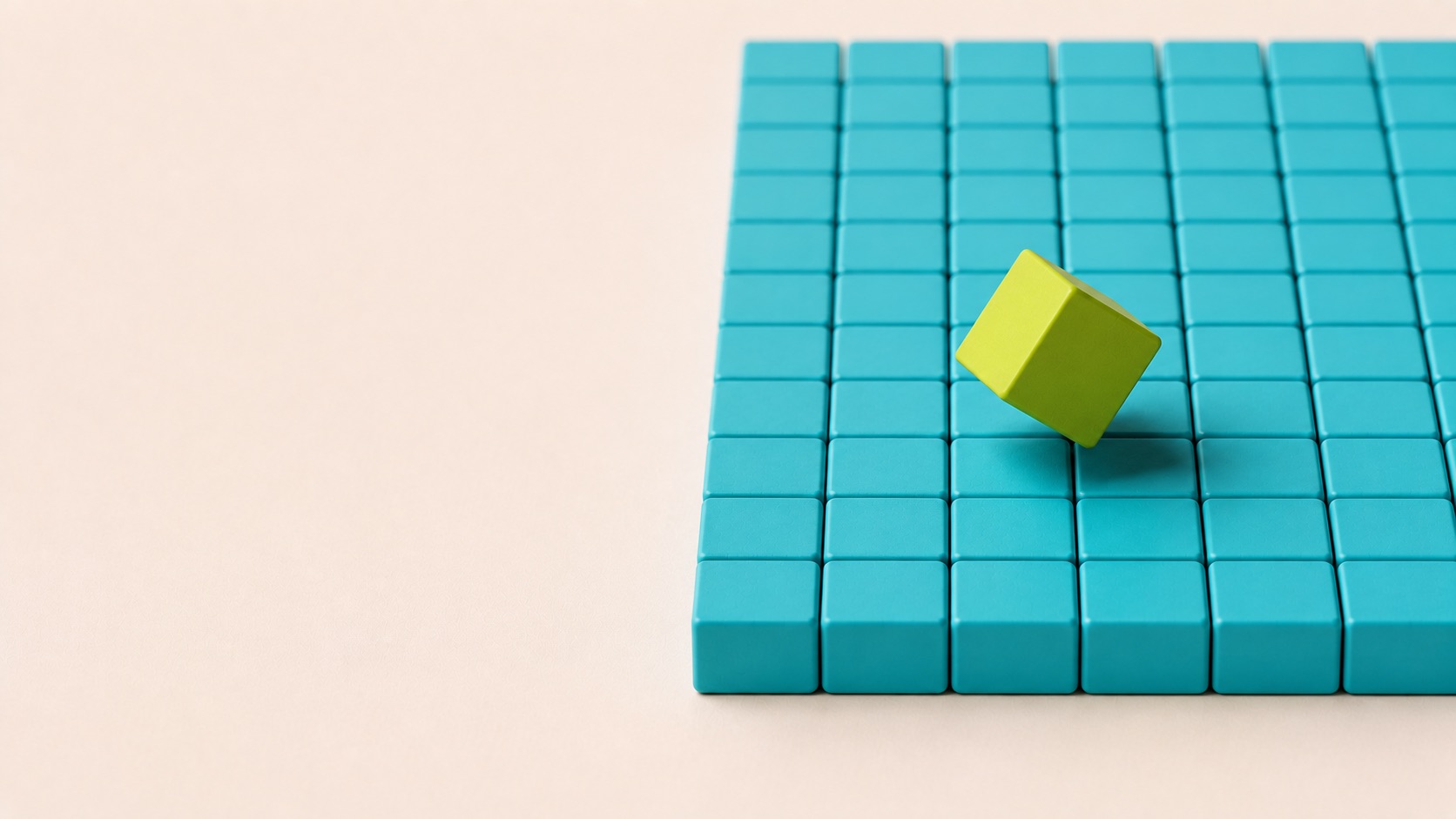
AI Is Making Brands Look Better, But Is It Making Them Weaker?
For years, businesses struggled to create professional-looking branding.
Design required expertise. Brand strategy required research. Content creation required time.
Today, AI can generate all of it within minutes.
Logos. Websites. Marketing copy. Social media posts. Brand guidelines.
On the surface, this sounds like a dream for businesses.
But as AI becomes more powerful, a new question is emerging:
What happens when every brand starts looking equally polished?
The answer could redefine branding in 2026.
The New Reality: Good Design Is No Longer a Competitive Advantage
Just a few years ago, having a well-designed website immediately separated a business from competitors.
Today, AI tools can generate:
- • Professional-looking websites
- • Brand identities
- • Marketing assets
- • Product visuals
At unprecedented speed. Recent industry analysis suggests that AI-generated creative quality is approaching parity with human-created work for many audiences, making visual quality alone a weaker differentiator than before.
The quality floor has risen dramatically.
Which means "looking good" is no longer enough.
Why Every Brand Is Starting to Look Similar
AI learns from patterns.
It studies successful designs, websites, advertisements, and brand systems.
Then it recreates variations of what already works.
The result?
Businesses gain access to professional-quality assets.
But they also become vulnerable to sameness.
When thousands of companies use similar prompts and similar tools, visual identities begin to converge. Industry observers are increasingly discussing how AI is reducing visual differentiation while increasing production speed.
This creates a new challenge:
How do you stand out when everyone has access to the same technology?
The Rise of the "AI Aesthetic"
For the last few years, many AI-generated designs shared common traits:
- • Overly polished visuals
- • Predictable layouts
- • Generic messaging
- • Similar design structures
Interestingly, one of the biggest design trends of 2026 is the move away from this recognizable "AI look" as tools become more sophisticated.
Businesses are beginning to realize something important:
Customers don't remember perfect.
They remember distinctive.
Branding Is Becoming More Human, Not Less
One of the most surprising trends emerging in 2026 is that as AI becomes more capable, human qualities become more valuable.
Consumers are increasingly drawn toward:
- • Authenticity
- • Personality
- • Original thinking
- • Real experiences
Several branding trend reports highlight a growing demand for human connection and trust as AI becomes more integrated into everyday marketing and customer experiences.
In other words:
The more content AI produces, the more valuable genuine brand personality becomes.
The Brands That Will Win in the AI Era
Many business owners assume AI will replace branding agencies.
The reality is more nuanced.
What AI is actually replacing is repetitive production work.
What it cannot replace is:
- • Brand positioning
- • Strategic thinking
- • Customer psychology
- • Market differentiation
- • Creative judgment
Recent discussions across the branding industry point toward hybrid AI-human workflows becoming the dominant model, where AI accelerates execution while humans provide strategic direction and taste.
The brands that win won't necessarily use the most AI.
They'll use AI most strategically.
Why Branding Agencies Matter More Than Ever
This may sound counterintuitive.
But AI is making branding agencies more important, not less.
Here's why:
When everyone can create content, design assets, and websites instantly, businesses need guidance on:
- • What to create
- • Why it matters
- • How it aligns with business goals
- • How it differentiates them from competitors
Technology creates options.
Strategy creates direction.
And direction is what builds strong brands.
The New Competitive Advantage: Brand Perspective
In the past, businesses competed on production quality.
Today, they compete on perspective.
Customers are asking:
- • What does this brand stand for?
- • Why should I trust it?
- • How is it different?
- • What makes it memorable?
These questions cannot be answered by a logo generator.
They require strategic branding.
AI Is Changing Search Too
Another major shift happening in 2026 is that buyers are increasingly discovering brands through AI-generated answers rather than traditional search results.
This has given rise to concepts such as Generative Engine Optimization (GEO) and AI visibility, where authority, trust, and expertise become even more important than keyword stuffing.
For brands, this means:
Being visible is no longer enough.
Being credible is essential.
What Businesses Should Do Next
Instead of asking:
"How can AI replace our branding process?"
Businesses should ask:
"How can AI make our branding process stronger?"
Use AI to:
- • Speed up execution
- • Generate ideas
- • Improve workflows
- • Increase efficiency
But rely on human expertise for:
- • Strategy
- • Positioning
- • Creativity
- • Brand direction
The strongest brands of the future will combine both.
Final Thought
AI is transforming branding faster than anyone expected.
It is making design faster.
Content easier.
Production cheaper.
But it is also creating a world where many brands look increasingly similar.
In that environment, technology alone is not enough.
The businesses that thrive in 2026 and beyond will be the ones that use AI as a tool, while doubling down on what makes them uniquely human.
Because ultimately, customers don't remember tools.
They remember brands.
And Strong brands are built on strategy, personality, and perspective.
Not just automation.